
Searching for a Warrant in Carroll County
Open the official Carroll TNCRT case search. Select Circuit Court or General Sessions, then choose Criminal if the question concerns a criminal matter. Search Help says a party name or case reference can be used. A known year or case number can make a broad name search more manageable.
The portal is a court-case index, not a live warrant check. If the result shows a warrant-related event, contact the issuing clerk to learn what happened after that entry. For a city ticket, ask the municipal court or police clerk; for enforcement or surrender logistics, call the sheriff or jail.
- Choose the court and case type that match the matter.
- Search by one clear party name or a known case reference.
- Use the year or case number to narrow a large result set.
- Read the docket history, not only the first search row.
- Confirm current status with the issuing office or counsel.
Carroll County Warrant Search Portal
The TNCRT page is useful for locating a Circuit Court or General Sessions case. Its controls include party name, year, case number, court type, and case type. A human check is required before results load. The portal has no warrant-number field, active/inactive switch, service status, bond amount, or recall date.
The statewide Tennessee Public Court Records System describes the participating trial-court search service. The Carroll screen shows court records as available through its office; it does not claim to list every city, juvenile, sealed, or federal matter.
This capture shows the search interface only. It is not a screenshot of a warrant result or an active list.
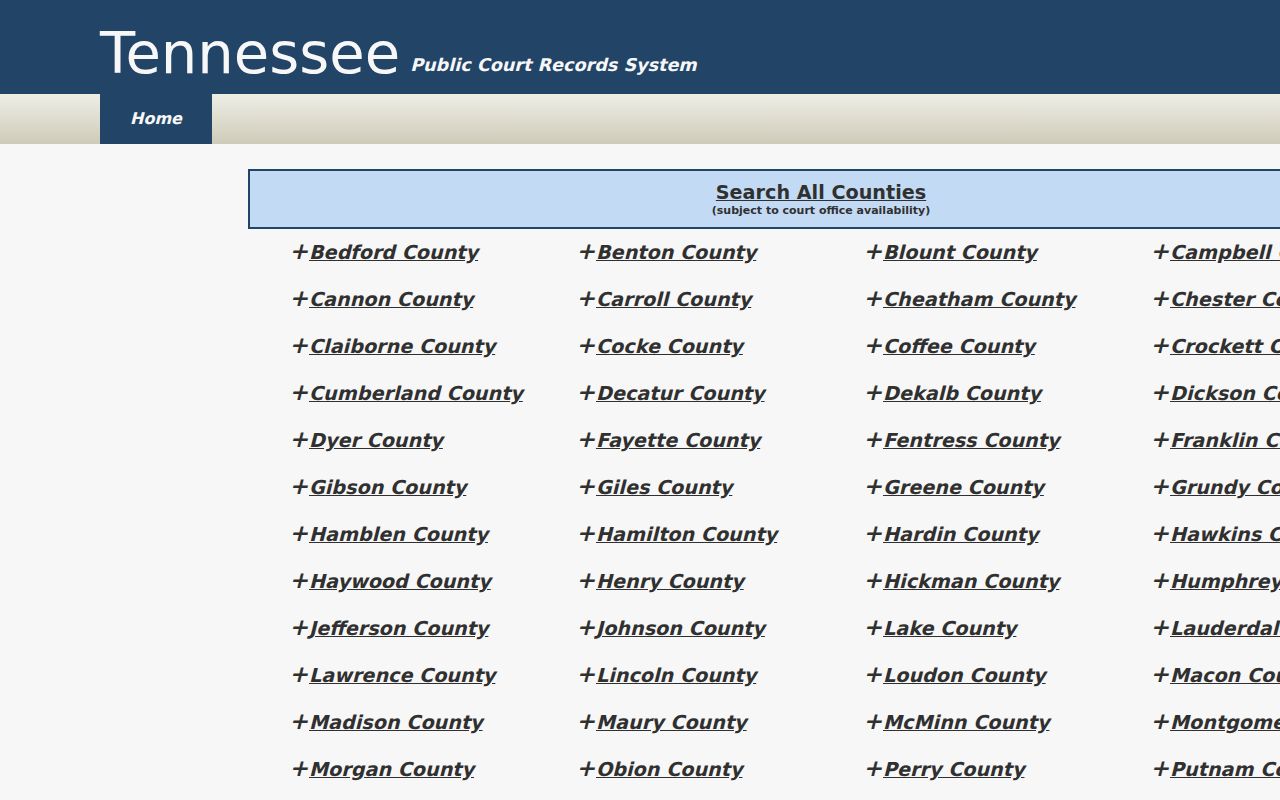
The state portal supplies context; Carroll's case page remains the county record-search route.
Warrant Search Fields Explained
Carroll's form offers several ways to identify a case. Search Help marks no ordinary text field as required; the anti-bot check must pass before the search button works. Use the fields to locate a court record, not to infer current warrant status.
| Field Label | Type | Required | Notes |
|---|---|---|---|
| Party Name | Text, up to 100 characters | No | Full first and last name works best; exact phrases may use quotation marks. |
| Case Year | Text, up to 4 characters | No | Use a four-digit year; Search Help permits a year with a case reference. |
| Case Number | Text, up to 50 characters | No | For the sample format, use the numeric portion after the last hyphen. |
| Court Type | Checkboxes | No | Circuit Court and General Sessions. |
| Case Type | Checkboxes | No | Criminal and Civil. |
| Human check | Turnstile verification | Before search | Find Now stays disabled until verification is complete. |
Carroll County Warrant Docket Terms
A result can show the court title, case reference, charge, hearing type, violation date, and later docket events. Carroll's sample docket uses “Warrant Bench” as a case/type label and “Failure to Appear” as a violation description. Those words identify entries in the file, not the order's current force.
No single warrant-number format was located. A case number identifies the court file, while the issuing court's order explains whether process was served, recalled, quashed, or replaced. Ask the clerk to explain a label if it is unclear.
What a Warrant Search Shows
Carroll's public docket schema includes the case reference, court division, case type, officer and attorney fields, count, charge, violation date, hearing type, and session date. Not every online result displays every document or event. A filing can be public while some related detail remains restricted.
Do not publish names from sample dockets or assume a visible event is current. Search Help describes approximate matching, a 2,500-result cap, and sortable result columns. A broad query may be incomplete or hard to review, so a known reference is more useful.
| Case reference | Use the court's number and year to identify the file. |
|---|---|
| Case and court type | Circuit Court or General Sessions, plus criminal or civil category. |
| Charge and violation | The offense and date recorded in the docket. |
| Hearing type | The listed setting or event, which may change later. |
| Warrant label | A docket clue only; it does not show service or recall status. |
Carroll County Warrant Requests Need Detail
When a copy or inspection is the goal, use the county's Public Record Request form. Name the record type, court, date range, and any case reference you know. Select inspection or copy and a delivery method; the form offers on-site pickup, email, fax, or mail.
The form says full payment is due before processing and lists cashier's check, money order, and a clerk phone route for card payment. It prints copy fees, but readers should confirm current amounts. A request is not an urgent status check.
The Tennessee Comptroller's Public Records Act FAQ explains that requests go to the government office holding the record.
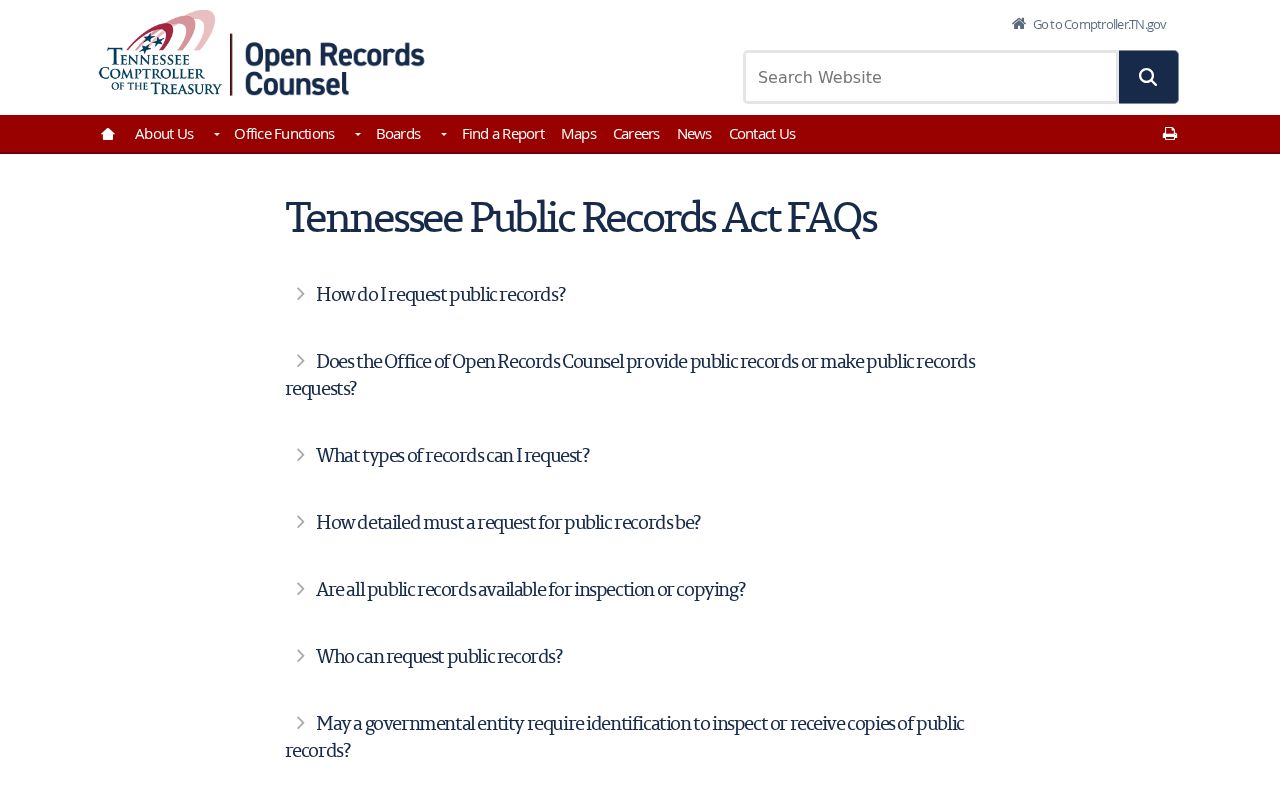
The Comptroller's Public Records Act FAQ explains that requests go to the government office holding the record.
The Comptroller explains that a public-record request goes to the government office that holds the record.
Where to Check Warrants in Carroll County
County, city, and federal records do not share one public search. Contact the office that holds the file, then ask the sheriff about enforcement logistics if needed. The county phone directory separates the sheriff, jail, court clerk, and city routes.
For Circuit or General Sessions case history, use the clerk or TNCRT. A municipal clerk handles a city citation; the federal clerk handles a federal case. No official public statewide active-warrant database was located for Tennessee.
Carroll Circuit Court Clerk
99 Court Square, Suite 103, Huntingdon, TN 38344
731-986-1932
General Sessions Criminal Clerk
County criminal and traffic docket route
731-986-1926
Carroll County Municipal Warrant Routes
A city ticket may not appear in TNCRT. Huntingdon handles traffic and ordinance court through its municipal-court clerk; McKenzie directs city citations through public safety; Bruceton lists the police secretary as court clerk. Trezevant and Atwood need a call to verify current court status and address details.
Federal matters are separate again. The Western District of Tennessee and PACER handle federal dockets, while the U.S. Marshals page describes regional fugitive work. Neither is a countywide state-warrant search.
Restricted Warrants and Access Rules
The Tennessee Public Records Act and Supreme Court Rule 34 allow access to qualifying records, subject to exceptions. Sealed files, juvenile matters, protected investigative details, and other exempt records may not be visible. A public case-search result is not a complete view of every court document.
For Carroll County, a narrow request to the right clerk is more useful than asking for every warrant. The county form provides a way to seek a non-exempt record, while Rule 114 explains why juvenile and dependency records need special treatment.
Access checks:
Tennessee Supreme Court Rule 34 describes which court records are open and how courts handle restricted files.
Rule 114 limits access to juvenile and dependency records.
A blank result is not proof that no warrant exists; verify with the issuing court or sheriff.
Carroll County Search Is Not Status Proof
A missing result does not establish that no warrant exists. The matter may be filed in a city court, newly entered, sealed, juvenile, or federal; a result may also show an old event after a later order. The TNCRT portal has no service, active-status, or recall field.
Call the issuing clerk with the case reference and ask what action is in the file. If the concern is possible booking or surrender, contact counsel and separately ask the sheriff or jail about logistics. The county publishes a general sheriff number, not a universal walk-in protocol.
For county court routing, the Circuit Court Clerk's main number is 731-986-1932; criminal Circuit and General Sessions questions have separate clerk lines at 731-986-1927 and 731-986-1926. The offices list courthouse hours of 8 a.m. to 4 p.m. Confirm the current schedule and the clerk for the court type before visiting, since a city citation may require a municipal contact instead.