
Carroll County Arrest Warrants Explained
An arrest warrant is a judge's order letting law enforcement take someone into custody. Tennessee Rule 4 governs warrants and summonses issued on a complaint. A sworn complaint or affidavit starts things off. From there a judge weighs the legal basis before signing anything. Carroll County local rules then take over, moving criminal warrants to the clerk and setting the first appearance after an arrest. The public portal can help you find a file. What it will not show is every service event or the current enforcement status, so treat it as a starting point rather than an answer.
Carroll County Warrant Starts With a Complaint
Tennessee's criminal rules draw clear lines between three documents. Rule 3 covers the complaint. Rule 4 covers the judge's choice between an arrest warrant and a summons. Rule 5 governs the initial appearance. Each step leaves its own court record, though the public search may not display every supporting paper behind it. The official Tennessee Rules of Criminal Procedure page spells out those rule names, and Carroll County's court page identifies the Circuit/Criminal and General Sessions offices that can route a local case.
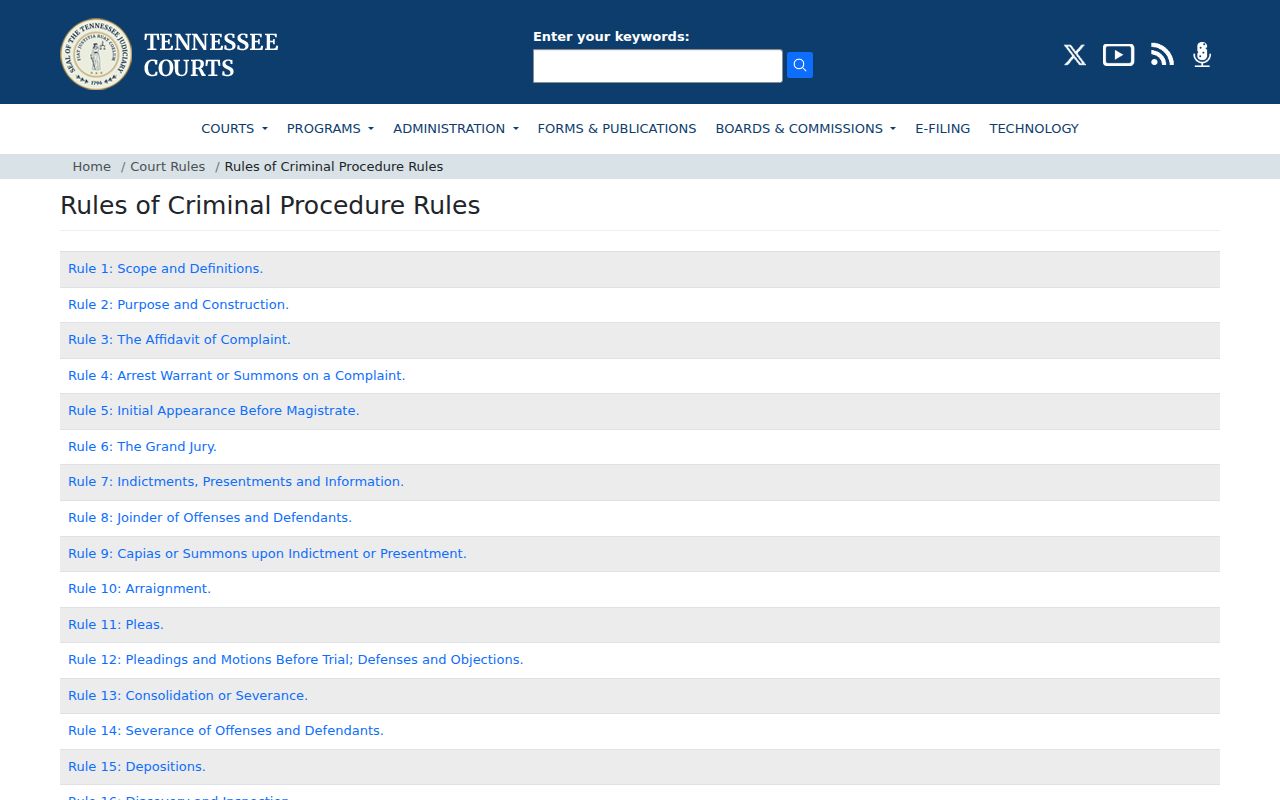
The rule page explains process; it is not a searchable Carroll County warrant database.
Inside a Carroll County Arrest Warrant
The public docket sample lists the fields worth learning: court, case reference, party, officer, attorney, count, charge, violation date, and hearing type. Those pieces help you match a Carroll County criminal case to the right file. The warrant instrument itself may carry separate terms or supporting documents, so matching a case is only the first move. Once matched, ask for the actual warrant or any later order if that paper matters to your question. Keep expectations straight, too. The county sample is a docket illustration, not a warrant image and not a live service return. And since no single Carroll County warrant-number pattern exists, never guess one from a sample cause number.
| Case reference | Use the court's file number; no single county warrant-number pattern was located. |
|---|---|
| Named party | A case field may identify a defendant; do not republish names from sample records. |
| Charge and count | The docket's stated offense and count. |
| Issuing court | Circuit/Criminal Court, General Sessions, or another court identified by the file. |
| Bond and date | Confirm the actual order and current amount with the court; no universal schedule was found. |
| Service or return | A later court or law-enforcement entry may address service; the search page is not a live status tool. |
Carroll County Arrest Warrant Booking Process
A court-case result is not a booking confirmation. Carroll County local rules say sheriff citations are handled at booking, and the initial appearance gets scheduled under the local process. That is a court procedure, nothing more. It promises nothing about release timing, intake hours, or where a person sits right now. The county publishes no universal bond amount, property rule, booking window, or release deadline. For the court record, ask the case clerk. For logistics, ask the sheriff or jail. Counsel can tell you what to expect before you make an in-person decision. Remember that a booking entry and an arrest-warrant entry answer different questions. A docket may record a later appearance or bond, but an online case page will not confirm whether someone is currently at the jail. Use the county's published jail contact for custody questions, and ask the clerk about any court order or next setting.
Carroll County Arrest Warrants Under Rules 3 to 5
Tennessee's criminal rules split the process into three stages. Rule 3 covers the complaint. Rule 4 covers the magistrate's review and the issuance of an arrest warrant. Rule 5 covers the initial appearance after arrest. Each stage can leave its own docket entry, which is why a later hearing notice should never be confused with the warrant instrument itself. The Tennessee criminal rules set the statewide procedure. Carroll County's local rules handle how sheriff citations move to booking and onto the initial-appearance calendar. Ask the clerk which rule and which order apply to the specific cause. The court record controls any next setting.
Serving Arrest Warrants in Carroll County
The Carroll County Sheriff's Office and local agencies serve process under the court's direction. The county posts no dedicated warrant-unit page, no public service roster, and no universal surrender hours. For service questions, the sheriff's general number is the verified public route. After an arrest, local rules address booking, appearance bond, and a first court setting. They set no single release schedule for every case. A federal warrant runs through a different court and agency, and a city citation may start with city police or a municipal court. Carroll County also publishes no roster of service attempts, no warrant-specific sheriff email, and no set surrender hours. When you call to verify service, give the issuing court and case reference. Whether an order was recalled or changed, only the court can say.
Carroll County Warrant Service Contacts
Carroll County lists the sheriff at 731-986-8947 and the jail at 731-986-1906. Route enforcement or surrender questions to the sheriff. Route booking questions to the jail. For a court-file question, the Circuit Court Clerk is the better first call, and its page lists separate criminal and General Sessions staff. Do not assume the sheriff can explain a judge's order, or that the clerk can arrange booking. Ask which office handles your exact question, whether counsel should contact the court, and what record reference will help staff find the case. The county's official contact directory and Circuit Court page carry the current office routing.
Comparing Arrest, Summons, and Bench Warrants
Three orders, three meanings. A summons tells you to show up in court. An arrest warrant lets police take you into custody. If you missed a court obligation, the judge can issue a bench warrant, sometimes called a capias. Before you respond to anything, ask the issuing clerk which order sits in the Carroll County file.
| Feature | Arrest Warrant | Summons | Bench Warrant |
|---|---|---|---|
| What it directs | Take a person into custody | Appear in court | Respond to a missed or unmet court obligation |
| Basis | Complaint and probable-cause review | Rule 4 process chosen by the court | Existing case or court order |
| Record route | Issuing criminal court | Issuing court | Court that set the original appearance |
| Next step | Ask counsel and court about service and appearance | Attend by the date listed | Ask about recall, reset, or appearance |
Carroll County City and Federal Warrants
A Carroll County case search answers county questions only. City ordinances and traffic tickets often live with a municipal clerk in Huntingdon, McKenzie, Bruceton, Trezevant, or another town instead. Atwood's municipal court status takes a direct call to verify. Federal matters run through the Western District of Tennessee and PACER. The county portal filters Circuit Court and General Sessions; it is no statewide or federal service. So read your citation or case number first, then ask the right court.
Carroll County Arrest Warrant Status by Court
Tennessee posts no public statewide active-warrant database. A Carroll TNCRT search covers county case history, and that is all it covers. City citations can sit with a municipal clerk. Federal records follow their own federal channels. One system's result never settles a case filed somewhere else. For county criminal status, call the Circuit Court Clerk. Give the court division and the case reference. Then ask whether a later order changed the warrant entry. The Sheriff's Office handles a different question, namely whether its officers served the process. A public-record copy or a booking inquiry adds context. Only the issuing court can confirm whether its warrant remains active.
If There's an Arrest Warrant for You
Confirm the issuing court and the order before you act. A lawyer can tell you whether to seek a recall or quash, arrange a voluntary surrender, or sort out bond. Carroll County publishes no universal bond chart and no walk-in surrender procedure. A records request is not a surrender appointment, so plan the steps with the court itself. Call the clerk and ask which court record and next hearing apply. Ask the sheriff or jail about service and booking logistics. Keep any written release or recall order, and ask how it reaches the other offices holding the case.
Important: Speak with counsel and the issuing court before appearing; county sources publish no universal surrender, booking, bond, or release procedure.
Carroll County Bond and Recall Need Confirmation
Local rules cover appearance bonds, but Carroll County sets no universal amount, payment method, or release time. A judge fixes the terms case by case. CourtFeePay handles fines and citations, not warrant recall. Ask the issuing clerk whether bond or a motion applies, and how a signed order changes the docket. The sheriff or jail can explain booking logistics. A payment receipt alone does not prove a recall; confirm the latest entry and next setting with the clerk.